Origins of the Sound
Concert 3
Handel Ode for St. Cecilia’s Day (HWV 76)
For nearly twenty years beginning in 1683, the musicians of London held special celebrations on November 22, the feast day of St. Cecilia, the patron saint of music. Following a church service, there would be a banquet and a performance of a new ode to St. Cecilia, which would praise the power of music. John Dryden, contributed two poems to the celebrations, which were set to music by various composers.
Handel composed his Ode for St. Cecilia's Day in a mere nine days, during September of 1739. The Ode for St. Cecilia's Day was enormously popular, and Handel revived it for performances nine times during his lifetime. All of its arias were soon published, and it was known by many people on the continent.
Handel was clearly inspired by the opportunities in Dryden's poem to depict musical effects. Following the overture, the ode begins with a representation of chaos and the "jarring atoms" being called into order by the power of music. Some of Handel's word painting is unabashedly obvious but very effective. In the first chorus, he depicts the words "From harmony, from heavn'y harmony" with broad, full chords, and the words "Through all the compass of the notes it ran" with scales up and down. The poem and the music then go on to portray the power and character of the various instruments, ending in a massive final chorus, which describes the trumpet at the last judgment when "music shall untune the sky."
Handel’s Ode takes us from the beginning to the end of time, and music has been the engine of the universe. Jubal, Orpheus, St. Cecilia, music of the spheres, the last judgment -- they are all ingredients in the rich mix of classical and Christian imagery in Dryden's poem and Handel's music.
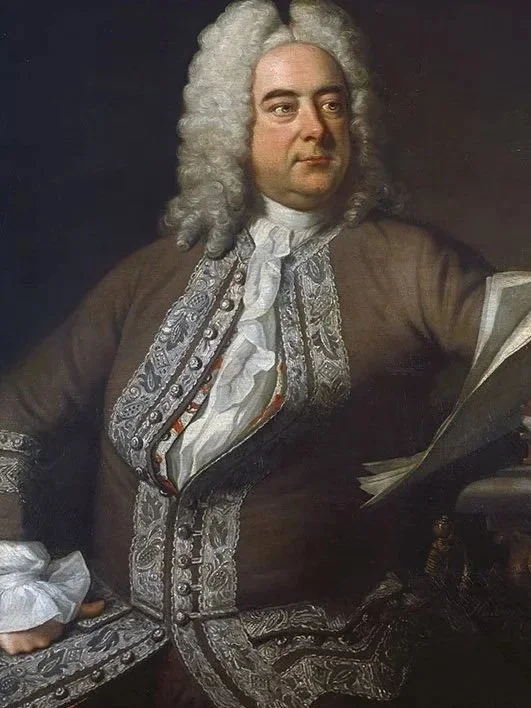
George Friedrich Händel (1685–1759)
Vivaldi’s Magnificat (RV 610/611)
Vivaldi was a sickly child, possibly asthmatic. While he was ordained to the priesthood, he was excused from celebrating mass. He was also an impressive violinist; he was taught by his father, a violinist working for St. Mark’s Cathedral, who toured with him around Venice while he was still a small child.
The “Red Priest”— an appellation referring to his red hair— became violin master at a public orphanage, Ospedale della Pieta, in 1703; although he spent much of his time after 1718 traveling in Europe, he remained associated with the Pieta until 1738, and continued composing for them - 140 concerti composed between 1723 and 1733 alone. (His total output exceeds 500 concerti!)
He also composed operas, of which at least 50 are known; these had, at best, modest success, but clearly supplied enough for him to live on.
In its time, his music was known all over Europe. Although they never met, Bach, was an admirer, and transcribed at least three of Vivaldi’s works. Thereafter, Vivaldi’s works almost disappeared until they were (accidentally!) rediscovered after WWI, including the Four Seasons violin concerti, which are arguably Vivaldi’s best-known works today.
Two versions of Vivaldi’s Magnificat exist. Vivaldi constructed alternative parts for several movements of the version the Scholars Baroque will perform: These alternatives were written as vocal solos to be performed by specific graduates of the Pieta.
Our performance will include some of these. For example, the second movement, Et Exultavit, was intended as a solo for a girl Vivaldi identified as “Apollonia”. Apollonia was said to be ’a strong singer’ by the composer J. J. Quantz who heard her in 1726.
“This Magnificat was written between 1720 and 1735, after Vivaldi left full-time duty at the Pieta; it is just as elaborate and as beautiful as his Gloria although it sadly is not as frequently performed.
Magnificats are settings of the song of Mary, Luke 1:46-55, after her visitation by the angel Gabriel. While the Magnificat belongs, liturgically, with the Feast (or Solemnity) of the Annunciation, which occurs on March 25, it is often associated with Christmas.
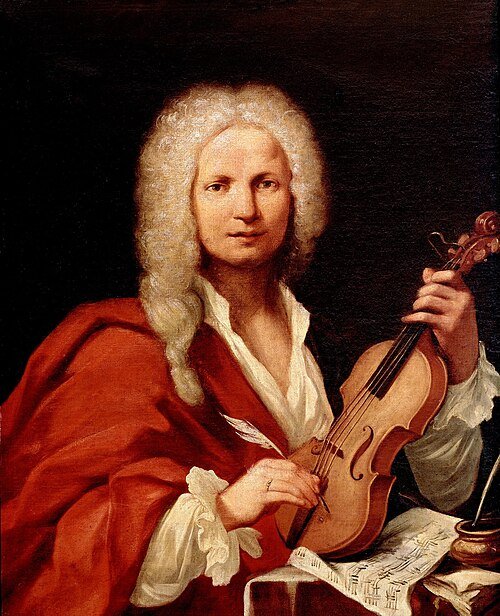
Antonio Vivaldi (1678–1741)
Corelli’s Concerto Grosso in G Minor (Op. 6 No. 8) - The “Christmas Concerto”
Corelli’s public had long awaited the publication of his sixth and last opus of concertos, but Corelli, a perfectionist, took his time choosing and revising them. Some may have been written as early as 1682 and are thus among the earliest concerto grossi composed. His ill health prevented final preparations, and three days before he died he entrusted the planned Opus 6 to Fornari, his student and assistant, who had them published at last in 1714. Op. 6 fulfils in every way the prediction of Corelli’s contemporaries that they would “render his name for ever more immortal.”
Of the twelve, the eighth in G minor is the most widely known. The subtitle “Christmas Concerto” stems from Corelli’s own inscription on the title page: “Fatto per la notte di natale” (written for Christmas Eve). The composer also wrote “Pastorale ad libitum” after the last Allegro, indicating that the work could be performed without the final Pastorale, which was meant for performance in church on that night. The piece, however, is seldom heard without the Pastorale—it would be difficult to omit such a beautiful movement.
The Christmas Concerto, which became extremely popular even during his lifetime, was played at his funeral service.
Like all the Opus 6 works, the Christmas Concerto is a concerto grosso, which contrasts and alternates a solo group of performers with a larger ensemble. The contrast of the groups permeates most of the work, accounting for many of its structural niceties.
In seventeenth-century Italy the pastorale became associated with Christmastime as a representation of the shepherds who attended Jesus’ birth. Baroque composers imitated shepherd music with simple melodic upper parts, often in parallel thirds and sixths, over a drone similar to that of bagpipes - Corelli uses the drone sparingly. Regular attendees of the Scholars Baroque annual performance of Messiah with NZBarok will recognise the Pifa as a pastorale - a nod to the Italian influence in Handel’s training. Corelli appears to have been the first to include a pastorale in a concerto and to have such a piece performed in church on Christmas Eve.
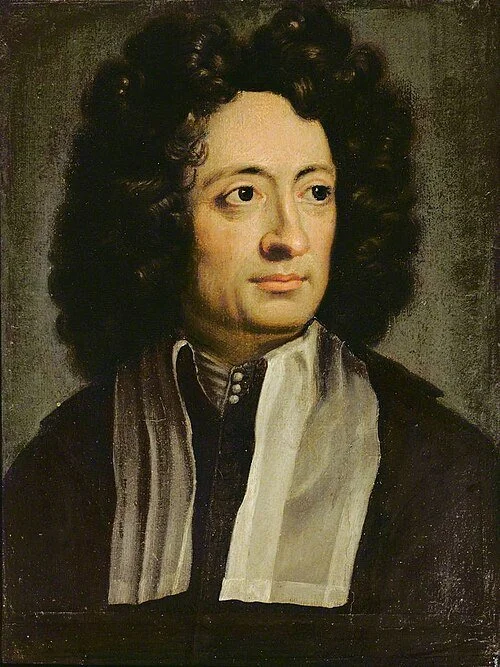
Arcangelo Corelli (1653-1713)